
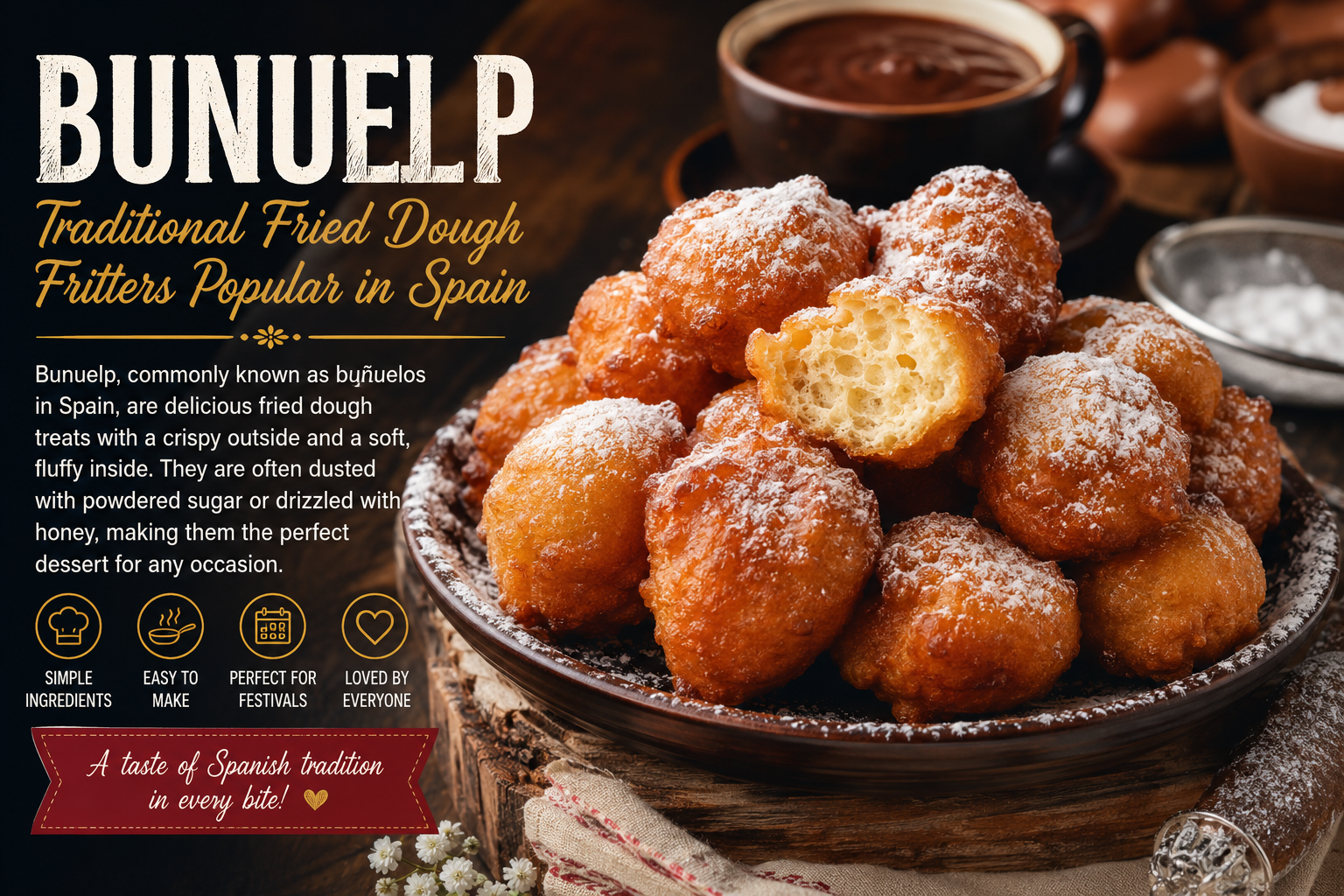
Bunuelp is a term many people search when looking for information about Spain’s famous fried dough treats. In most cases, the intended word is buñuelos, a traditional Spanish pastry enjoyed during holidays and family gatherings. Even so, the keyword bunuelp has become popular in online searches, making it useful to understand what people are looking for. This guide explains the history, ingredients, preparation, serving ideas, and cultural importance of bunuelp in simple English. By the end, you will know why these delicious fried treats continue to be loved across generations.
What Is Bunuelp?
When people search for bunuelp, they are usually looking for information about Spanish buñuelos. These are small balls of dough that are fried until they become light, golden, and crispy. After frying, they are often covered with powdered sugar or drizzled with honey for extra sweetness. Some versions are filled with chocolate, cream, or fruit jam to create a richer dessert. Because of their delicious taste and soft texture, bunuelp treats are enjoyed by both children and adults.
The History of Bunuelp
The history of bunuelp goes back hundreds of years in Spain and nearby regions. Different cultures influenced the recipe over time, creating many local versions that people still enjoy today. Families passed the recipe from one generation to another, keeping the tradition alive. As a result, bunuelp became an important part of celebrations and special occasions. Today, these fried dough fritters remain one of Spain’s most recognizable traditional desserts.
Why Bunuelp Is Popular in Spain
Many people love bunuelp because it combines simple ingredients with wonderful flavor. The outside becomes crispy while the inside stays soft and fluffy after frying. In addition, the dessert is easy to customize with different toppings and fillings. Families often prepare bunuelp together during holidays, making the experience even more memorable. Therefore, this classic treat continues to be a favorite throughout Spain.
Ingredients Used to Make Bunuelp
Traditional bunuelp recipes use ingredients that are available in most kitchens. Flour forms the base of the dough, while eggs help create a soft and airy texture. Water or milk is added to mix everything together, and butter gives extra richness. A small amount of salt balances the sweetness of the finished dessert. Finally, vegetable oil is used for deep frying until each piece becomes golden brown.
Step-by-Step Bunuelp Recipe
Making bunuelp at home is easier than many people think. First, combine flour, butter, water, eggs, and salt into a smooth dough. Next, heat clean cooking oil in a deep pan until it reaches the correct frying temperature. Carefully drop small portions of dough into the hot oil and fry until they puff up. Finally, remove them, drain the extra oil, and coat them with powdered sugar before serving.
Different Types of Bunuelp
There are many regional versions of bunuelp across Spain and other Spanish-speaking countries. Some recipes are plain and lightly dusted with sugar for a simple flavor. Others include creamy fillings such as vanilla custard, chocolate, or whipped cream. In some places, cooks add cinnamon, lemon zest, or orange zest for extra aroma. Because of these variations, everyone can find a bunuelp style they enjoy.
Best Time to Eat Bunuelp
People often enjoy bunuelp during festivals, family events, and religious celebrations. In Spain, these fried treats are especially popular on All Saints’ Day and during Christmas. However, many bakeries also sell them throughout the year because customers always enjoy them. They taste wonderful when served warm with hot chocolate or fresh coffee. As a result, bunuelp has become a comforting dessert for every season.
Tips for Making Perfect Bunuelp
Good ingredients make a noticeable difference when preparing bunuelp at home. Always use fresh eggs and high-quality flour for the best texture and flavor. Furthermore, keep the frying oil at a steady temperature so the dough cooks evenly. If the oil is too hot, the outside may burn before the inside finishes cooking. On the other hand, oil that is too cool can make the fritters absorb excess oil.
Health Information About Bunuelp
Although bunuelp is a delicious dessert, it should be enjoyed in moderation because it is fried. It contains carbohydrates from flour and protein from eggs, which provide energy. However, the frying process also increases the calorie content compared to baked desserts. You can reduce extra oil by draining the fritters on paper towels after frying. Even so, enjoying bunuelp as an occasional treat is a great way to experience traditional Spanish cuisine.
Popular Ways to Serve Bunuelp
There are many creative ways to serve bunuelp for family and friends. Powdered sugar is the classic topping because it highlights the light texture of the fritters. Some people also drizzle honey or caramel sauce over the warm pastries for added sweetness. Fresh berries, chocolate sauce, or vanilla ice cream can turn bunuelp into a special dessert. Consequently, these serving ideas make every occasion feel more festive.
Bunuelp Around the World
Although bunuelp is closely connected with Spain, similar fried pastries exist in many countries. Each region has developed its own recipe using local ingredients and traditions. Nevertheless, the idea of light fried dough remains the same in almost every version. Travelers often discover new variations while exploring different cultures and cuisines. Therefore, bunuelp represents both Spanish heritage and the worldwide love of comforting desserts.
Common Mistakes to Avoid
Many beginners make small mistakes when preparing bunuelp for the first time. Using dough that is too thick can produce heavy fritters instead of light ones. Likewise, overcrowding the frying pan lowers the oil temperature and affects the final texture. It is also important to let the cooked fritters drain properly before adding sugar. By avoiding these common errors, you can enjoy delicious homemade bunuelp every time.
Why You Should Try Bunuelp
Bunuelp offers a wonderful combination of crispy texture, soft interior, and sweet flavor that appeals to many people. The recipe uses simple ingredients, making it easy for beginners to prepare at home. Moreover, you can customize the filling or topping to match your personal taste. Sharing fresh bunuelp with family and friends creates warm memories around the dining table. For these reasons, this traditional Spanish dessert remains popular across generations.
Conclusion
Bunuelp is a popular search term for the traditional Spanish dessert known as buñuelos. These golden fried dough fritters have delighted families for centuries with their light texture and sweet flavor. Whether served with powdered sugar, honey, or a creamy filling, they offer a comforting taste of Spanish tradition. In addition, they are simple to prepare using everyday ingredients found in most kitchens. If you enjoy homemade desserts, bunuelp is a classic recipe worth trying and sharing with the people you love.
FAQs
Is bunuelp the same as buñuelos?
Yes. Most people searching for bunuelp are referring to buñuelos, the traditional Spanish fried dough fritters.
Can I make bunuelp without filling?
Yes. Many traditional recipes are served plain with only powdered sugar or honey.
What is the best oil for frying bunuelp?
Vegetable oil or sunflower oil works well because both have a neutral flavor and high smoke point.
Can bunuelp be prepared in advance?
Yes. However, they taste best when served fresh and warm shortly after frying.
What drinks go well with bunuelp?
Hot chocolate, coffee, tea, and warm milk are all excellent choices.