Introduction
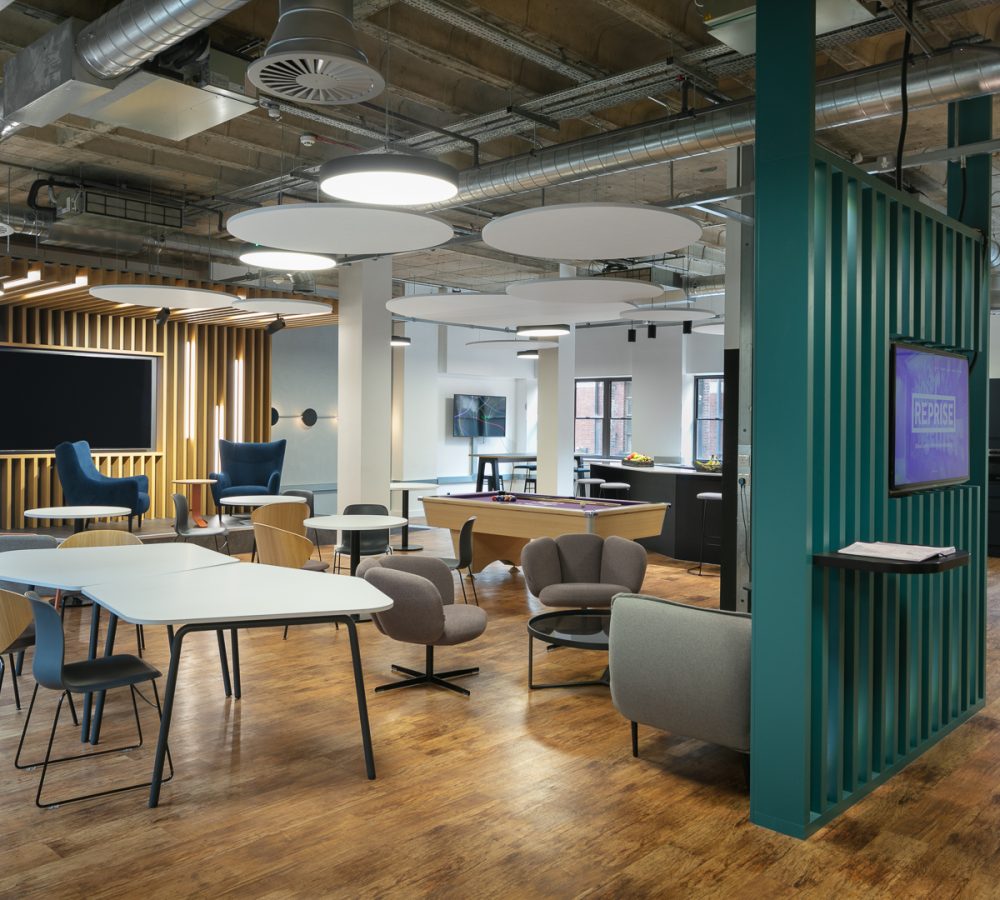
Open plan office design arranges work areas within a continuous interior. Fixed walls remain limited. Desks, meeting zones, and shared spaces occupy a unified floor. The layout reflects collective use of space.
Visual connection extends across the environment. Movement occurs without enclosure. The space appears open and interconnected.
Use of Shared Work Areas
Open plan office design supports multiple functions within a single layout. Workstations, informal seating, and meeting tables exist within the same area. Each zone reflects a specific activity.
Collaborative work occurs in open sections. Individual tasks take place within quieter zones. Circulation paths connect these areas.
The layout operates through zoning. Physical barriers remain minimal. The space supports varied use without separation.
Communication Patterns
Open plan office design allows direct interaction between occupants. Desks remain visible across the floor. This arrangement supports frequent exchange.
Verbal communication occurs without relocation. Proximity shapes interaction patterns. The environment reflects continuous contact.
The absence of enclosed rooms reduces delay in communication. Interaction remains immediate. The space reflects shared presence.
Space Distribution
Open plan office design uses floor area without extensive structural division. Walls and corridors remain limited. Workstations occupy much of the interior.
Furniture defines spatial boundaries. Desks and storage units create organization. The arrangement reflects controlled distribution.
Unused areas remain reduced. The layout maintains consistent occupation across the floor.
Flexibility of Layout
Open plan office design allows adjustment through movable elements. Desks and partitions shift as required. The layout adapts to changes in team structure.
Reconfiguration occurs without structural alteration. Zones change position within the same footprint. The system remains functional after modification.
The structure reflects adaptability. It remains stable during repeated adjustments.
Light Movement
Open plan office design allows light to travel across the interior. Windows provide illumination to a wider area. Workstations share access to daylight.
Artificial lighting distributes evenly across open zones. Partitions influence this movement. Lower elements allow partial transmission.
The layout reflects consistent lighting conditions. Surfaces remain visible throughout the space.
Circulation Flow
Open plan office design integrates circulation paths within the layout. These paths connect work areas and shared facilities. Movement follows clear routes.
The absence of walls reduces obstruction. Travel between zones remains direct. The layout reflects continuous flow.
Defined pathways maintain order within the open structure. The system supports predictable movement patterns.
Conclusion
Open plan office design operates through shared space, zoning, and minimal enclosure. The layout supports communication, flexible arrangement, and efficient use of area. Each section reflects a specific function within a continuous environment.
Light distribution and movement patterns remain consistent across the floor. The structure allows adjustment without altering its overall form.
Office Insight works with open plan office design and workplace planning. Their approach reflects structured zoning, controlled circulation, and consistent spatial organization within office interiors.
For more information, visit https://officeinsight.co.uk