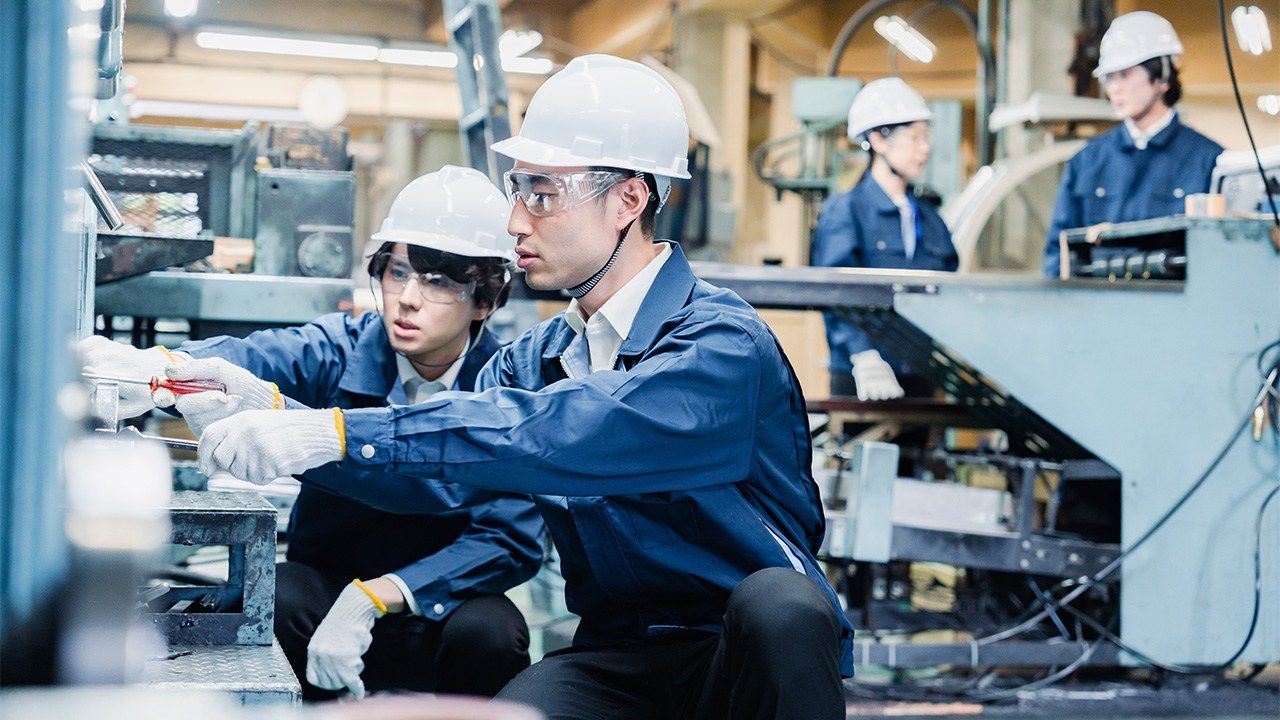
When people start looking for steady work abroad rather than short-term options, the Czech Republic often becomes one of the countries they consider, as its job market is strongly connected to industry and remains active throughout the year. At this point, people often study actual job offers to see how positions are organised and what is expected on a daily basis, while platforms like Layboard.in give a clearer view of typical working conditions for those without prior experience in European industrial settings. For some applicants from India, this also helps better understand what working in an industrial environment in Europe looks like.
Why industrial jobs dominate the Czech labour market
The Czech Republic has developed as a production and logistics hub in Central Europe, where industrial sectors form the core of the employment market. For foreign workers, this creates a system where jobs are more predictable but also more structured and demanding.
Continuous demand across manufacturing and logistics
Factories, warehouses and distribution centres in the Czech Republic usually operate year-round, without clear seasonal breaks, so hiring continues on a regular basis instead of being limited to specific periods. For many job seekers, looking through jobs in Czech Republic often highlights the stability of such roles compared to other European markets.
Why foreign workers are essential for industrial sectors
Many companies face a shortage of local staff, which is why they increasingly look beyond the domestic workforce. International employees help keep production processes running without interruptions. This creates accessible entry points into the labour market, although it also means adjusting to a stricter work structure, fixed routines and clearly defined expectations from employers.
1. Factory Assembly Line Worker
This type of work is widely offered to foreign employees in the Czech Republic and usually involves simple production tasks, such as putting parts together or assisting with basic equipment. The routine rarely changes, so focus and accuracy matter. For many people, the hardest part is getting used to a steady tempo, since output is checked regularly and workers are expected to keep the same speed during the whole shift.
2. Warehouse Picker and Packer
In warehouse environments, the job is centred around preparing orders — finding items, packing them and getting them ready for dispatch, often with the help of scanning devices. Many applicants choose this as a starting option, although the combination of physical activity and time pressure can feel challenging in the beginning.
3. Forklift Operator
This role involves moving goods within warehouses or production areas using specialised equipment and usually requires basic training or certification before starting; it can offer higher pay than entry-level jobs, but it also comes with more responsibility, particularly in terms of safety and proper equipment handling.
4. Production Line Operator
In this position, workers are typically involved in operating and monitoring machinery to ensure that the production process runs without interruptions. They are also expected to identify and report any technical problems that may occur during the shift.
For many applicants, this type of work may feel unfamiliar at first, as it often requires a basic understanding of how equipment functions and how production systems are organised.
5. Construction Labourer
Work in construction usually involves taking part in basic building activities, moving materials around the site and assisting skilled workers with everyday tasks.
This type of job can be physically intensive, but it remains one of the more accessible options, especially for those who have prior experience in hands-on work.
6. Quality Control Inspector
In this role, workers check finished items before they move further, making sure everything meets the required standards. The job depends on focus and the ability to notice small details rather than physical effort; it can suit those who prefer lighter work and are okay with repeating the same checks during the shift.
7. Logistics Assistant
Work in this role is built around the movement of goods — from handling simple paperwork to supporting daily processes inside warehouses or distribution centres.
For candidates, this kind of position often becomes a way to see how supply chains function in practice within a European work environment.
8. Industrial Cleaner
This job is focused on keeping workspaces clean and safe in both factories and storage facilities. Duties are repetitive and carried out according to clear internal rules.
These positions are usually treated as a starting point and may be suitable for those who are still adjusting to a different workplace routine.
The Czech Republic offers a structured and predictable labour market centred around industry. Understanding the nature of these jobs and the expectations attached to them helps candidates make more informed decisions before relocating.
FAQ
How strict are productivity targets in Czech industrial jobs?
In many roles, performance is monitored, and workers are expected to maintain a steady pace throughout the shift.
What surprises foreign workers most during the first weeks?
Many notice the structured routines and direct communication style, which can feel unfamiliar at first.
Are shifts always the same, or can schedules change?
Shift patterns may vary depending on the employer, including day, night or rotating schedules.
How quickly do new workers adapt to industrial roles?
Adaptation usually takes a few weeks, especially for candidates from India who may need time to adjust to pace and structured routines.
Do workers need to interact much with supervisors?
Communication is usually task-focused and direct, with clear instructions given for daily work.